
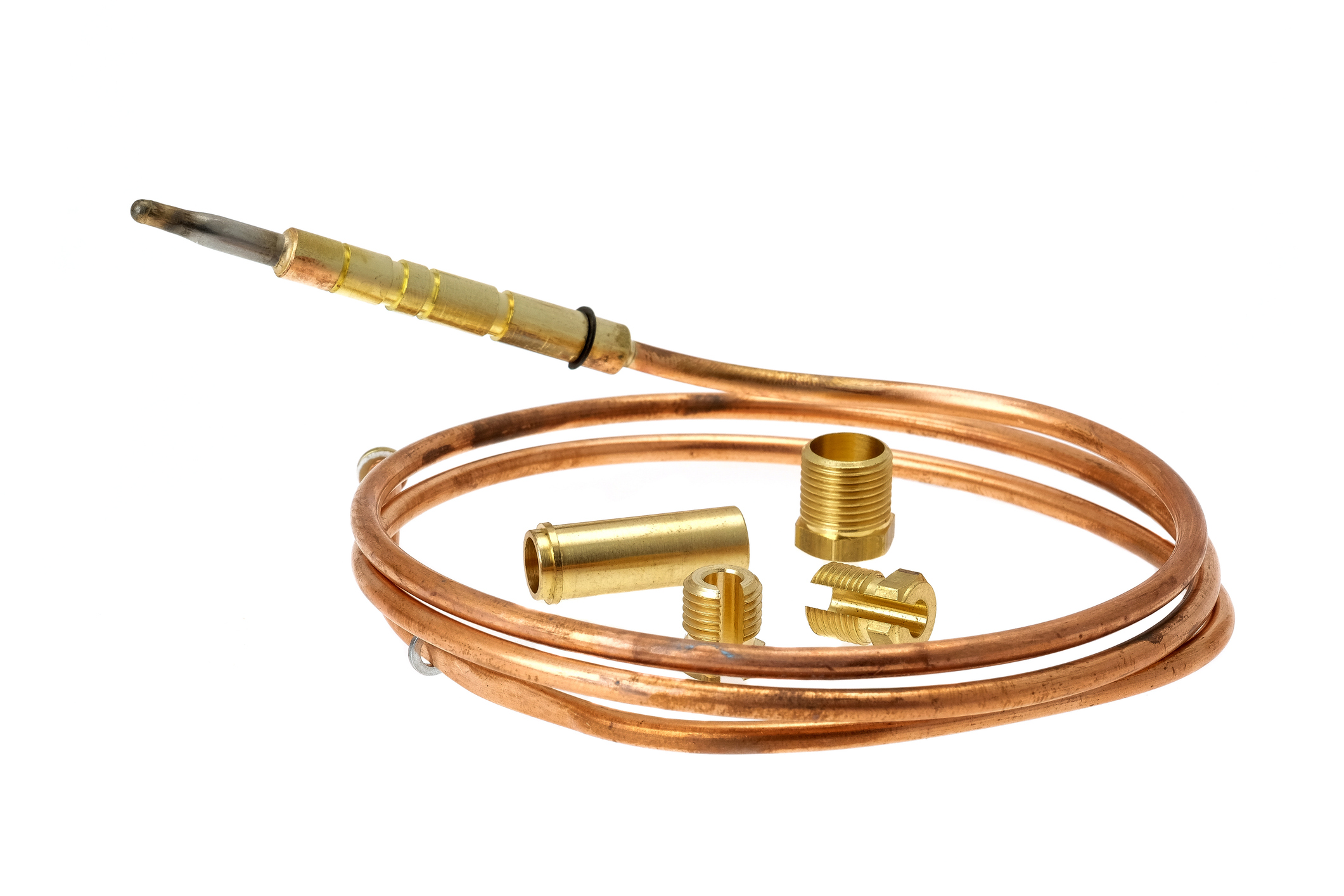
Thermocouple vs Thermopile: Key Differences in Commercial Kitchen Equipment
By Michael Angello
Thermocouples and thermopiles are critical safety components found in many types of gas-powered commercial kitchen equipment. These small but essential parts help ensure that gas systems operate safely by shutting off gas flow if a pilot light goes out.
Understanding the difference between a thermocouple vs thermopile is important when diagnosing equipment issues or ordering replacement parts. While they serve similar purposes, they function differently and are not interchangeable.
In this guide, we’ll explain how thermocouples and thermopiles work, their key differences, and how they are used in commercial cooking equipment.
How Thermocouples and Thermopiles Work
Both thermocouples and thermopiles operate using thermoelectric principles. They convert heat from a flame—typically a pilot light—into a small electrical signal.
This electrical signal acts as a safety mechanism. If the pilot flame goes out, the signal stops, and the gas supply is shut off. This prevents unlit gas from leaking into the kitchen.
The main difference is the amount of voltage they produce:
-
Thermocouple: Produces approximately 30 millivolts
-
Thermopile: Produces approximately 300 millivolts
A thermopile generates more voltage because it is made up of multiple thermocouples connected together.
What Is a Thermocouple?
A thermocouple is a temperature sensor made from two dissimilar metals joined together. When exposed to heat, it produces a small electrical current.
In commercial kitchen equipment, thermocouples are primarily used as safety devices.
They:
-
Detect whether the pilot light is lit
-
Maintain a small electrical current
-
Help keep the gas safety valve open
It’s important to note that a thermocouple does not open the gas valve itself. Instead, it works with an external power source—typically a 24-volt circuit—to control gas flow.
Common Applications of Thermocouples
Thermocouples are widely used in:
-
Gas fryers
-
Ovens and ranges
-
Boilers and furnaces
-
Water heaters
They are especially important in systems where monitoring pilot flame status is critical for safety.
What Is a Thermopile?
A thermopile is made up of multiple thermocouples connected together. This design allows it to generate a higher voltage output.
Because of this increased voltage, thermopiles can do more than just detect a flame. They can actually generate enough power to operate a gas valve directly, without the need for an external power source.
When properly heated, thermopiles provide a steady voltage that helps control gas flow and maintain consistent operation.
Common Applications of Thermopiles
Thermopiles are commonly found in:
-
Gas fireplaces
-
Commercial cooking equipment
-
Infrared temperature devices
-
Thermal sensing systems
In foodservice equipment, they are often used where higher voltage is required to operate gas valves.
Key Differences Between Thermocouples and Thermopiles
While thermocouples and thermopiles may look similar, they serve different functions.
Key differences include:
-
Construction:
Thermocouples use a single junction, while thermopiles consist of multiple thermocouples -
Voltage Output:
Thermocouples produce low voltage, while thermopiles produce higher voltage -
Function:
Thermocouples act as safety sensors, while thermopiles can generate enough power to operate components -
Applications:
Thermocouples are used for safety shut-off systems, while thermopiles are used where higher energy output is required
Are Thermocouples and Thermopiles Interchangeable?
No, thermocouples and thermopiles are not interchangeable.
Although they serve similar safety functions, they are designed for different applications within gas systems.
However:
-
Thermocouples can often be replaced with similar models of the correct length
-
Thermopiles can typically be replaced with compatible thermopile units
Whenever possible, it is recommended to use OEM replacement parts to ensure proper performance and safety.
Cost Differences to Consider
Another important difference is cost.
-
Thermocouples are generally more affordable, often under $50
-
Thermopiles are more complex and typically cost $50 or more
Understanding these differences can help when budgeting for repairs or replacements.
Choose the Right Part for Your Equipment
Using the correct component is essential for maintaining the safety and performance of your equipment.
If you are unsure whether your unit uses a thermocouple or a thermopile, it’s best to consult with a professional.
General Parts offers OEM commercial kitchen equipment parts and expert support to help you find exactly what you need.
Call 1-888-498-1238 to speak with a parts specialist or request assistance online.